Eye Checkup After 40: Which Eye Tests Do You Actually Need?
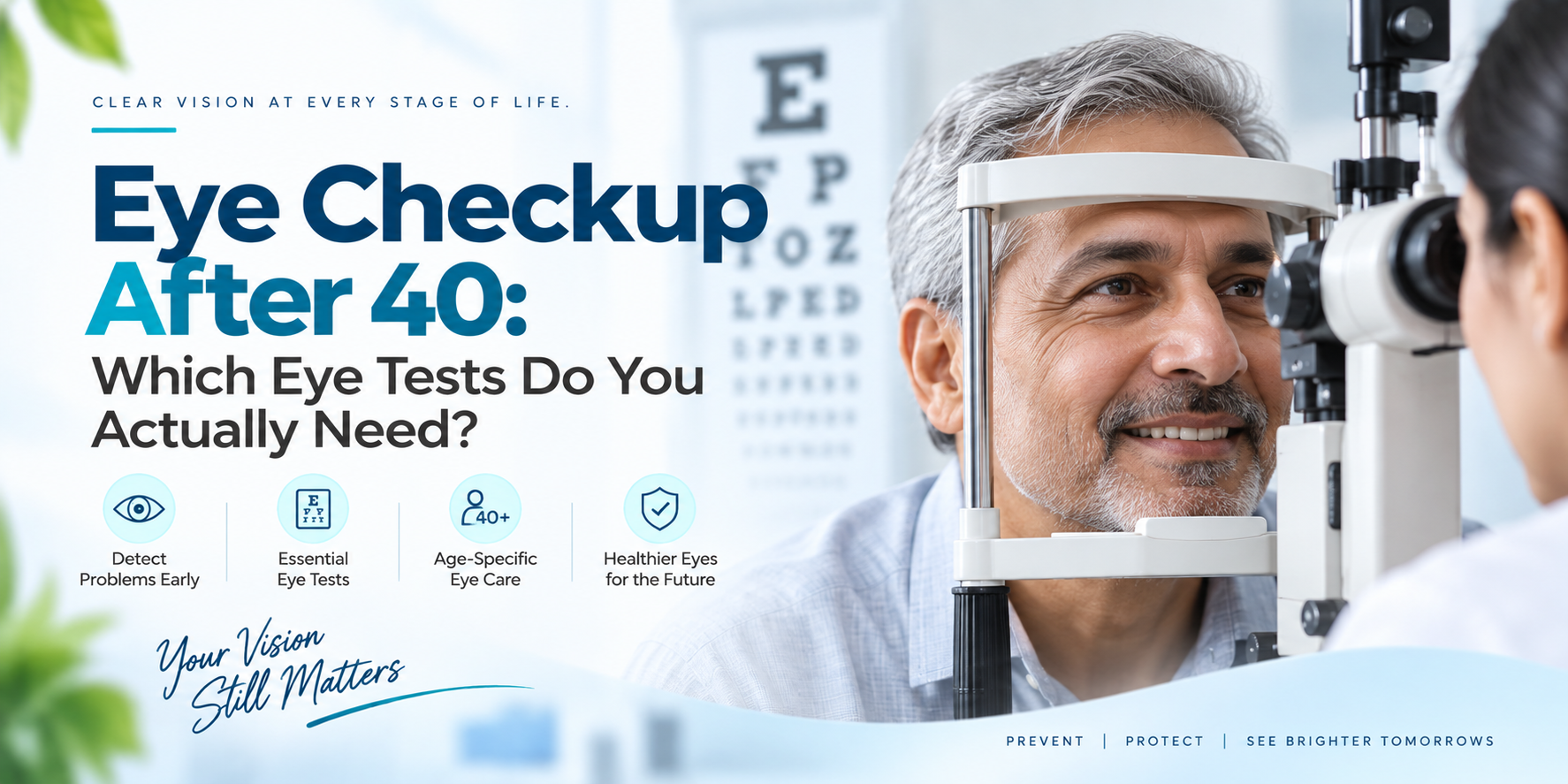
Why eye health deserves more attention after 40
Turning 40 does not mean that everyone will suddenly develop an eye problem. However, age is associated with a greater likelihood of several eye conditions, and some of them can develop gradually without obvious symptoms.
Many adults think an eye checkup is only necessary when they need new spectacles. A comprehensive eye examination is broader than a routine glasses check. It can help identify changes involving the lens, optic nerve, retina and other parts of the eye.
Is a routine vision test enough?
A vision test measures how clearly you can see, but it does not by itself provide a complete assessment of eye health.
Someone may have good central vision and still have an eye condition that requires attention. For this reason, the appropriate examination depends on age, symptoms, family history, medical conditions and other risk factors.
If you have diabetes, a family history of glaucoma, previous eye problems or a sudden change in vision, your examination may need to be more detailed.
What tests may be included in an eye checkup after 40?
The exact tests vary from patient to patient, but a comprehensive eye assessment may include:
Vision and refraction testing: checks how clearly you see and whether spectacles may improve your vision.
Eye pressure measurement: helps assess pressure inside the eye and forms one part of glaucoma evaluation.
Slit-lamp examination: allows the ophthalmologist to examine structures at the front of the eye, including the cornea, iris and lens.
Retinal examination: allows the doctor to look at the retina and optic nerve for signs of disease.
Dilated eye examination: in appropriate patients, dilating the pupils can provide a better view of the retina and optic nerve.
Additional tests: depending on the findings, the ophthalmologist may recommend visual field testing or other investigations.
Why glaucoma screening matters after 40
Glaucoma can develop slowly and may not cause obvious symptoms early on. It damages the optic nerve and can lead to permanent vision loss if it progresses.
Age, family history and other factors can influence glaucoma risk. An ophthalmologist can assess individual risk and advise how often examination is appropriate.
Importantly, eye pressure alone is not enough to diagnose glaucoma. A broader examination may be required.
Why cataract evaluation matters
Cataracts become more common with age and may cause gradual blurring, glare, difficulty seeing at night or changes in spectacle power.
An early cataract does not automatically mean surgery is needed. If vision remains comfortable and functional, an ophthalmologist may recommend observation. When a cataract begins to interfere with daily activities, treatment options can be discussed.
Why people with diabetes need extra attention
Diabetes can affect the retina and may cause diabetic retinopathy, which can develop without symptoms in its early stages.
People with diabetes should follow the eye-screening schedule recommended by their healthcare team. Depending on the patient’s condition, a dilated retinal examination and additional tests may be needed.
What symptoms should not be ignored?
A sudden decrease or loss of vision
Sudden flashes of light or a sudden increase in floaters
A curtain-like shadow in the field of vision
Severe eye pain with redness or blurred vision
Persistent unexplained blurred vision
New difficulty seeing at night or increased glare
Sudden changes in vision in a person with diabetes
How often should you have an eye examination after 40?
There is no single schedule that applies to every adult. The appropriate interval depends on age, family history, medical conditions, previous eye findings and other risk factors.
People with diabetes, a family history of glaucoma or known eye disease may need more frequent examinations. Your ophthalmologist can recommend an interval based on your individual risk.
Eye checkup in Thergaon and Wakad
For people living in Thergaon, Wakad, Tathawade, Ravet, Chinchwad and nearby PCMC areas, choosing an eye clinic that provides a proper ophthalmic assessment is more important than simply choosing the nearest place for a spectacle number check.
Dr. Sandeep Walmik Darunde, M.S. (Netraroga), is a Consultant Ophthalmologist associated with Saksham Hospital in Thergaon and hospitals across Pune. His clinical practice includes comprehensive ophthalmic evaluation, cataract care, glaucoma assessment, diabetic retinopathy screening and other eye conditions.
Frequently Asked Questions
Should everyone get an eye checkup after 40?
Adults should discuss the appropriate frequency of comprehensive eye examinations with an eye-care professional, especially if they have symptoms or risk factors.
Can an eye checkup detect glaucoma?
A comprehensive examination can help identify signs of glaucoma and determine whether further tests are needed.
Does an eye checkup only check spectacle power?
No. A comprehensive eye examination can assess several aspects of eye health in addition to vision and refraction.
Why do some eye examinations require dilating the pupils?
Dilation can allow the ophthalmologist to examine the retina and optic nerve more thoroughly.
Do people with diabetes need regular eye examinations even if they see clearly?
Yes. Diabetic retinopathy can have no early symptoms, so screening should not depend on whether vision feels normal.
When should I seek urgent eye care?
Sudden vision loss, flashes, a sudden increase in floaters, a curtain-like shadow, or severe eye pain with redness or blurred vision should be assessed promptly.
Final Takeaway
An eye checkup after 40 is not simply about whether you need stronger glasses. It is an opportunity to assess the health of the eyes and identify conditions that may not cause symptoms in their early stages.
If you have noticed a change in your vision or have risk factors such as diabetes or a family history of glaucoma, speak with an ophthalmologist about the right examination schedule for you.